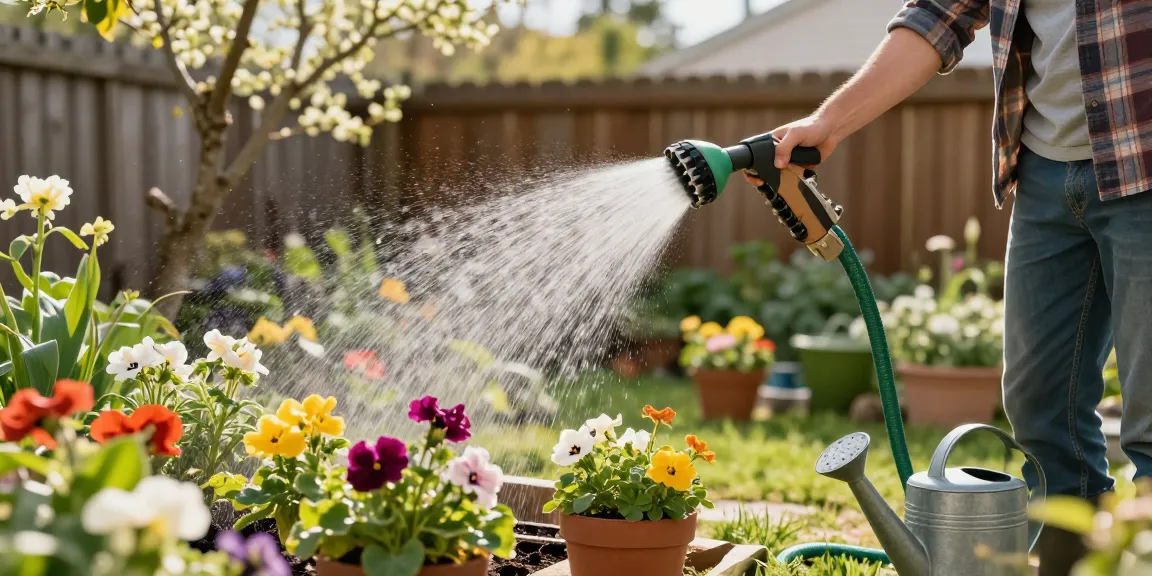
When Claire noticed yellowing patches in her suburban Ohio lawn and soggy soil around her raised beds, she assumed the sprinkler schedule needed to run more often. After three weeks of extra runs, the problem worsened: mushrooms popped up and her tomato seedlings developed blossom end rot. That’s a classic overwatering scenario many U.S. homeowners face — and the right smart timer and setup can correct it fast.
Misjudging How Much Water Plants Actually Need
Problem: Many people set fixed run-times—say, "10 minutes every morning"—without considering plant type, soil, or weather. Lawns, vegetables, and potted plants all have different needs. A clay lawn will hold moisture much longer than a sandy bed, so the same 10-minute cycle can over-saturate heavy soils.
Why this happens
Timers that only run on a fixed schedule don’t account for rainfall or recent watering. According to EPA WaterSense, smart irrigation controllers can save up to 15% on outdoor water use compared with conventional controllers, largely because they adjust to conditions (epa.gov/watersense) source. Homeowners who ignore that variability often overwater and create shallow roots and disease-prone plants.
Solution: Match run-time to plant and soil with a smart timer
Fix: Use a WiFi-enabled timer that lets you set different programs by zone and adjust run-time by soil type and plant. For example, set a vegetable garden drip zone to 20 minutes three times weekly, a clay-soil turf zone to 8 minutes twice weekly, and a potted-plant micro-spray to short daily cycles. A WiFi timer such as the RainPoint model lets you change schedules from your phone after a heavy storm and set seasonal adjustments automatically.
Concrete example: In suburban Ohio, Claire switched her front lawn to two 12-minute cycles once every 5 days (deep soak) and set the raised beds to 15 minutes three times per week via a smart timer. Within two weeks the mushroom flush retreated and tomato vigor improved.
Running Frequent Short Cycles Instead of Deep Soaks
Problem: Short, frequent watering—often called “daily sprinkling”—keeps soil surface moist but prevents roots from growing deep. That shallow rooting makes lawns and ornamentals vulnerable in hot spells and causes the appearance of overwatering (soggy topsoil, yellowing).
Why this happens
Frequent short cycles raise evaporation and create wet/dry layering. Many sprinkler timers are set for convenience (e.g., “a little every day”), but that’s counterproductive for established turf and shrubs. Extension services generally recommend deep, infrequent watering to encourage root depth.
Solution: Program cycles for root depth and use cycle-and-soak properly
Fix: Configure your smart timer to run multiple cycles with soak intervals when needed. For example, instead of one 12-minute session, program two 12-minute cycles separated by 45–60 minutes to let water penetrate clay soils without runoff. For a large in-ground lawn, a smart controller can run early-morning deep soaks twice weekly; for potted plants, shorter daily micro-drips are better.
Concrete example: A homeowner in Phoenix with compacted clay soil cut lawn watering from five 8-minute daily cycles to two 25-minute deep soaks per week using their smart controller. Soil probes showed moisture reaching 6–8 inches, and lawn stress dropped significantly.
Not Zoning Correctly: Mixing Different Needs on One Schedule
Problem: One valve feeding both a shady flower bed and a sunny lawn is a recipe for overwatering the shade plants and underwatering the sun lovers. When different plant types or sun exposures share a zone, the timer can’t match their divergent needs.
Why this happens
Hydrozones—groupings of plants with similar water needs—are fundamental. Many DIY systems lump everything together to save hardware, but that creates mismatched run-times. For instance, shrubs with deep roots need less frequent watering than shallow-rooted annual flowers.
Solution: Create proper zones and assign tailored programs
Fix: Re-plumb or reassign sprinkler heads so each hydrozone has its own valve. Then use a smart timer to set unique programs. RainPoint recommends pairing small lawns with mobile sprinklers and hobby beds with dedicated drip kits. For example, set your shady bed to 8 minutes every fourth day and the sunny lawn to 20 minutes twice weekly.
Concrete example: After splitting a mixed zone into two, one homeowner reduced watering for shade perennials by 60% while improving turf uniformity on the sunny side. The smart timer’s separate schedules handled the change without manual intervention.
Ignoring Rainfall and Soil Moisture — Let Sensors Do the Work
Problem: A calendar-based schedule that ignores rain is a common culprit. A heavy thunderstorm can make the next several programmed runs unnecessary, yet many timers keep watering unless you intervene manually.
Why this happens
Without feedback from the environment, controllers can’t tell the difference between a wet week and a dry one. That’s why automatic shutoff based on rainfall or real-time soil moisture is so effective—these features stop needless irrigation and prevent root rot and fungal problems.
Solution: Add rain sensors or soil moisture sensors and tie them to your smart timer
Fix: Install an in-line rain sensor or a soil moisture probe that communicates with your smart timer. If you want a direct path from problem to solution, learn how to fix overwatering issues with a smart irrigation timer — that page shows sensor-compatible setups and recommended sensor placement for beds, lawns, and pots.
Concrete figure: University extension tests show soil moisture sensors can reduce irrigation use by up to 30% in some landscapes by preventing unnecessary cycles. In practice, homeowners often see noticeably drier, healthier soil where sensors are used.
Using the Wrong Hardware: Emitters, Soaker Hoses, and Head Types
Problem: Overwatering can stem from the hardware itself. High-flow spray heads on a small vegetable bed or overly long soaker hoses that flood the surface deliver too much water too fast. The fix is matching the delivery method to the planting.
Why this happens
Spray heads blanket the surface quickly, which works for lawns but not for deep-rooted shrubs or a tomato patch. Soaker hoses and drip tubing deliver lower, steadier flow directly to the root zone. Without considering emitter flow rate and spacing, you’ll either drown plants or starve them.
Solution: Match the right irrigation setup to the zone and use the timer to coordinate flow
Fix: Pair zones to the appropriate hardware: small lawns with portable mobile sprinklers, large lawns with in-ground sprays, vegetable gardens with precise drip irrigation, flower beds with soaker hoses or low-flow drip, and potted plants with self-watering stakes or micro-tubing. A smart timer schedules each zone to the proper duration and frequency; for potted plants, set short, daily micro-drip runs to keep root balls evenly moist.
Table: Typical zone pairings and suggested weekly watering (approximate)
Zone TypeDeliverySuggested Weekly ScheduleLarge lawnIn-ground spray/rotor1–2 deep soaks (30–60 min each depending on system)Small lawnPortable sprinklers2–3 deep soaks (15–30 min)Vegetable gardenDrip lines/emitters3–5 short cycles (15–25 min) or as soil moisture indicatesFlower bedsSoaker hose/drip1–3 cycles (20–30 min) depending on soilPotted plantsSelf-watering / micro-dripShort daily cycles (5–15 min)
Concrete example: A homeowner replaced spray heads on a raised herb bed with a 1/2 GPH drip line and reduced total run-time by 70%. Herbs stopped yellowing and produced more robust leaves within a month.
For yards that need flexible solutions, a WiFi timer from RainPoint can handle multiple zones and the right run-times for each setup, eliminating a lot of manual tweaking.
- Check soil type first: sand drains faster than loam or clay.
- Group plants by water needs into separate zones.
- Add sensors to prevent watering after rain or when soil is already moist.
- Match hardware (drip, soaker, spray) to the planting type.